
Healthcare organizations today face a difficult balance. They want to innovate with AI and machine learning in healthcare, but they must also protect patient data, meet strict regulatory requirements, and maintain trust. In an industry where a single data breach can damage a reputation overnight, compliance and security are not optional. They are foundational.
At AI Panthers, successful healthcare innovation starts with partnership. Not just building software, but building secure, compliant, and customized AI healthcare software that aligns with clinical, operational, and regulatory realities.
Healthcare stands at the intersection of high demand and high responsibility. Search data clearly shows that healthcare leads other industries in AI-related interest and app development demand.
This reinforces what we see in the market every day. Hospitals, healthtech startups, diagnostics platforms, and insurance providers are actively investing in AI-driven solutions.
The reason is simple. Healthcare generates vast amounts of data. From electronic health records to diagnostic imaging and wearable device streams, the opportunity to apply AI and machine learning in healthcare is immense. However, the complexity of compliance frameworks such as HIPAA in the United States, GDPR in Europe, and other regional health data laws makes implementation challenging.
That is where the right development partner makes all the difference.
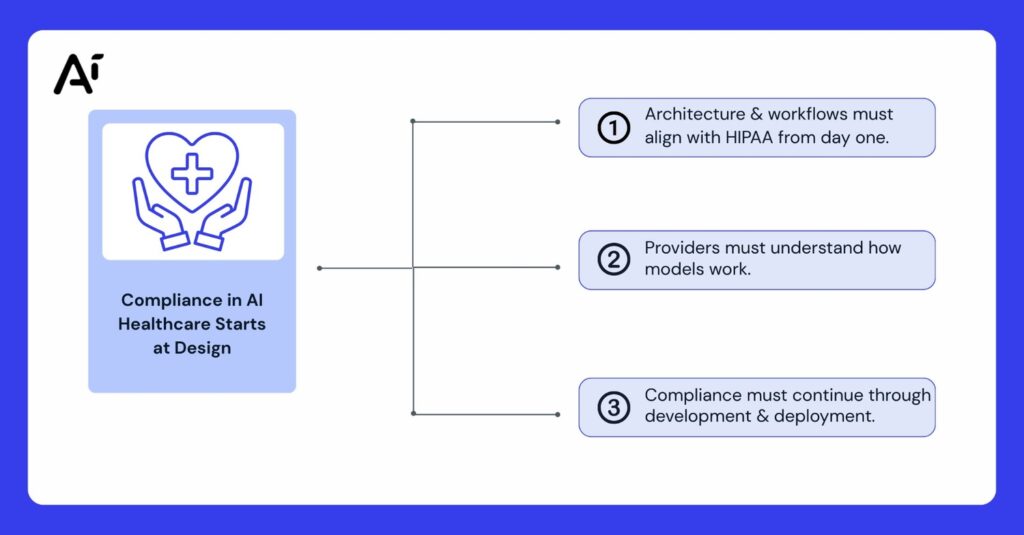
Compliance is not a checklist at the end of development. It is a design philosophy that influences architecture, infrastructure, and workflows from day one.
When building HIPAA-compliant AI apps, several pillars must be addressed:
But compliance is also about transparency. Healthcare providers need to understand how models are trained, how predictions are generated, and how decisions can be explained. Black box AI is risky in clinical environments. Trust grows when systems are interpretable and auditable.
AI Panthers integrates compliance into the entire AI development lifecycle, from requirement gathering to deployment and maintenance.
To understand how compliance and innovation can work together, it helps to look at real-world use cases.
AI-powered imaging solutions help radiologists detect abnormalities faster and with greater consistency. Organizations like Google DeepMind have demonstrated how machine learning models can analyze retinal scans and detect early signs of disease.
When developing such systems, compliance involves strict control over image datasets, secure storage, and validated model performance benchmarks.
AI chatbots and symptom checkers are transforming patient engagement. Platforms such as Ada Health provide intelligent symptom assessment tools that guide patients toward appropriate care.
For such tools, HIPAA-compliant AI apps must ensure patient conversations are encrypted, securely stored, and not used improperly for model retraining without consent.
Predictive models can forecast patient readmission risks, ICU deterioration, or disease progression. Institutions like the Cleveland Clinic have explored predictive analytics to enhance critical care decision-making.
In such cases, compliance means ensuring that sensitive patient data used for training is anonymized and securely handled. It also requires documented validation to avoid biased outcomes.
Natural language processing solutions reduce administrative burden by converting physician notes into structured records. Tools like Nuance Communications have pioneered voice-driven medical documentation.
For custom AI healthcare software in this space, protecting voice data, ensuring secure transcription pipelines, and restricting access to sensitive notes are non-negotiable requirements.
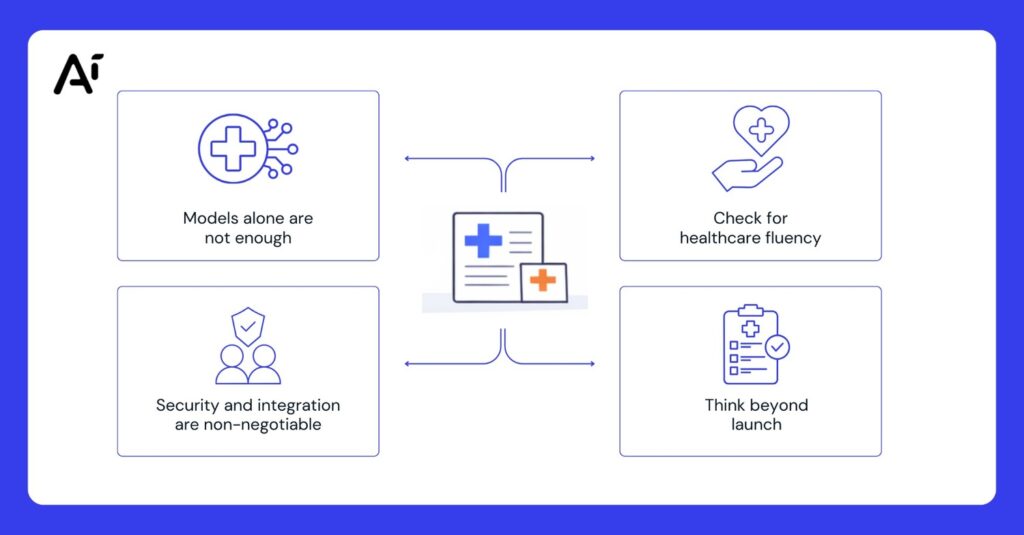
Not all healthcare AI vendors are equipped to handle regulatory complexity. Many AI development firms build strong models but lack domain understanding of clinical workflows or compliance obligations.
When selecting a development partner, healthcare organizations should evaluate:
AI Panthers positions itself as an AI-first healthcare development company. This focus ensures that every solution is tailored not only to technical requirements but also to clinical realities.
According to our brand vision, AI Panthers is committed to accessibility, speed, transparency, innovation, and partnership. Brand_Guidelines_aipanther.
These values directly influence how we build healthcare solutions.
We begin by understanding your clinical goals, compliance requirements, and data sources. Before writing a single line of code, we conduct risk mapping to identify potential vulnerabilities.
Our architects design systems with layered security. Encryption protocols, identity management, and audit frameworks are embedded into the system structure. Compliance documentation is created alongside development.
When implementing AI and machine learning in healthcare, we prioritize:
We collaborate with healthcare stakeholders to test outputs and refine model performance.
Deployment environments are configured to meet healthcare security standards. Access is restricted based on roles. Continuous monitoring ensures anomalies are flagged immediately.
Regulations evolve. Our partnership does not end at launch. We provide regular security reviews, compliance updates, and system optimization.
In healthcare, trust is everything. Patients trust providers with their most personal information. Providers trust technology partners to safeguard that information.
Trust grows when:
Custom AI healthcare software must offer visibility into data pipelines and model logic. This transparency reduces risk and strengthens confidence among administrators and clinicians.
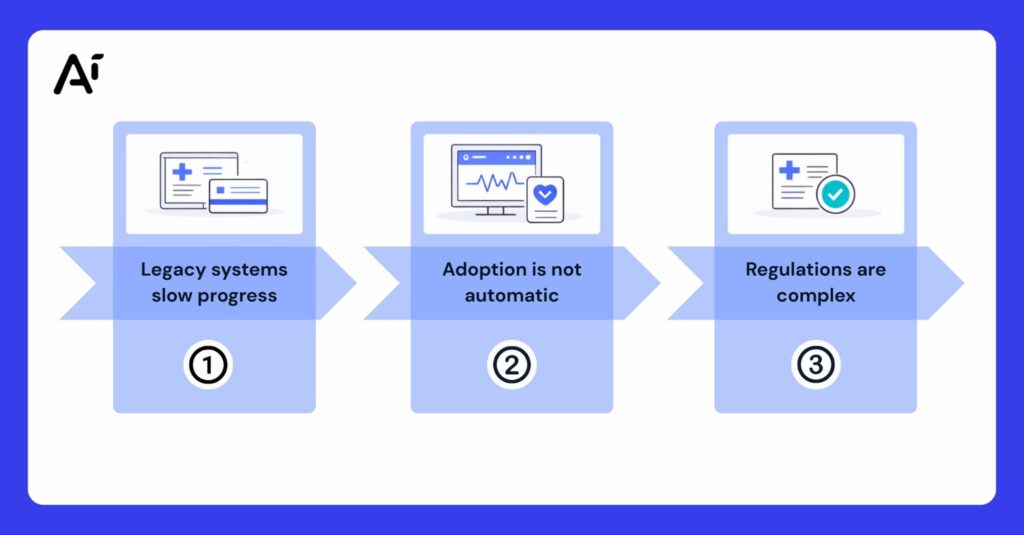
Even well-planned projects face obstacles. Common challenges include:
Data Silos
Healthcare data often exists across multiple systems. Integration requires careful planning and secure APIs.
Legacy Systems
Older hospital software may lack modern integration capabilities. Custom connectors and middleware solutions are often necessary.
Change Management
Doctors and staff may resist new tools. Training and clear communication are critical for adoption.
Regulatory Ambiguity
Regulations can be complex and region-specific. Working with experienced healthcare AI vendors minimizes compliance missteps.
AI Panthers addresses these challenges by combining technical expertise with structured project governance.
AI is not a one-time implementation. It is a continuous evolution. Models require retraining. Security standards change. Patient expectations shift.
That is why partnering for AI success is about more than delivering code. It is about building a long-term relationship focused on innovation and compliance.
Healthcare organizations need a partner who understands both the transformative power of AI and machine learning in healthcare and the gravity of compliance responsibilities
The future of healthcare AI will be defined by systems that are:
As adoption increases, regulators will tighten oversight. Organizations that prioritize compliance from the start will gain a competitive advantage.
HIPAA-compliant AI apps will become the standard, not the exception. Custom AI healthcare software will differentiate providers who want solutions tailored to their workflows from those who rely on generic platforms.
AI Panthers stands ready to build these next-generation systems with a security-first mindset.
Healthcare innovation cannot come at the cost of patient trust. Implementing AI and machine learning in healthcare requires careful planning, secure architecture, and a deep understanding of regulatory requirements.
By partnering with experienced healthcare AI vendors like AI Panthers, organizations can confidently build HIPAA-compliant AI apps and custom AI healthcare software that are scalable, secure, and future-ready.
The goal is not just to adopt AI. The goal is to build intelligent systems that protect patients, empower clinicians, and meet the highest standards of compliance and trust.
If your organization is ready to transform healthcare delivery while staying secure and compliant, AI Panthers is your strategic partner for success.