
Healthcare has always been driven by one core goal: better patient outcomes with higher accuracy. Over the last few years, that goal has become far more achievable thanks to rapid advances in AI in medicine and healthcare. What once felt experimental is now becoming a practical, everyday tool inside hospitals, clinics, diagnostic centers, and digital health platforms.
From reducing diagnostic errors to streamlining hospital operations, artificial intelligence is reshaping how care is delivered. This shift is not about replacing doctors. It is about giving them sharper tools, better insights, and more time to focus on patients. In this blog, we will explore how AI improves accuracy and efficiency in healthcare delivery, the real benefits of AI in hospitals, and why the future of healthcare AI is both practical and patient-focused.
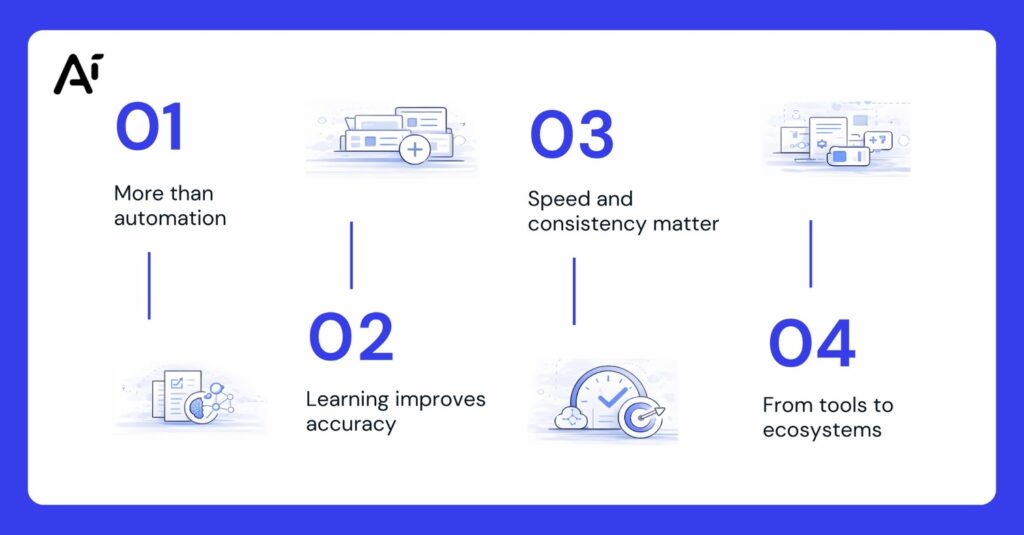
AI in medicine and healthcare refers to the use of machine learning, natural language processing, computer vision, and predictive analytics to analyze medical data, support clinical decision-making, and automate repetitive tasks. These systems learn from large volumes of data such as medical images, electronic health records, lab reports, and patient histories.
Unlike traditional software, AI systems improve over time. The more data they process, the more accurate and context-aware they become. This makes them especially valuable in healthcare, where accuracy, speed, and consistency directly affect patient outcomes.
Today, AI healthcare trends show a clear shift from isolated tools to fully integrated AI-powered healthcare applications. These apps support doctors, nurses, administrators, and patients across the entire care journey.
Medical errors remain one of the biggest challenges in healthcare systems worldwide. Missed diagnoses, delayed treatments, and administrative mistakes can have serious consequences for patients. At the same time, hospitals are under pressure to handle growing patient volumes with limited resources.
This is where AI in medicine and healthcare plays a critical role. By analyzing patterns that humans may miss and processing data at scale, AI helps reduce variability and human error. It does not get tired, distracted, or overwhelmed by data.
Accuracy leads to better patient outcomes. Better outcomes build trust. And trust is the foundation of modern healthcare.
One of the most impactful uses of AI in medicine and healthcare is diagnostics. AI-powered systems can analyze medical images such as X-rays, MRIs, CT scans, and retinal images with remarkable precision.
These systems are trained on thousands or even millions of labeled images. Over time, they learn to detect subtle abnormalities that the human eye may miss, especially in the early stages of disease.
For example, AI tools are already helping radiologists detect tumors, fractures, and internal bleeding more quickly and accurately. In ophthalmology, AI models are being used to identify early signs of diabetic retinopathy before symptoms appear.
This does not replace specialists. Instead, it acts as a second layer of validation, reducing the chances of missed or incorrect diagnoses and improving confidence in clinical decisions.
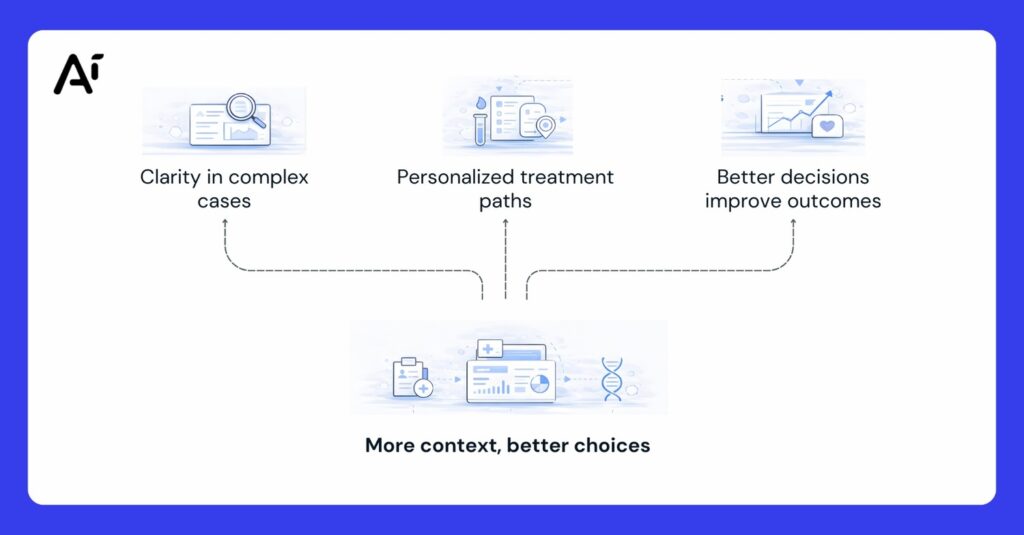
Beyond diagnostics, AI supports doctors in making more informed treatment decisions. By analyzing patient history, lab results, genetics, and previous treatment outcomes, AI systems can suggest personalized treatment options.
This is especially valuable in complex cases where multiple variables need to be considered. AI can quickly surface relevant insights, helping clinicians choose treatments more likely to succeed for a specific patient.
As personalized medicine continues to grow, AI in medicine and healthcare will play a central role in tailoring care plans that improve recovery rates and long term outcomes.
Accuracy alone is not enough. Efficiency is equally critical for sustainable healthcare systems. One of the most significant benefits of AI in hospitals is its ability to streamline workflows and reduce operational bottlenecks.
AI powered healthcare apps can automate appointment scheduling, patient triage, billing, and documentation. Natural language processing tools can convert doctor patient conversations into structured medical notes, reducing the time clinicians spend on paperwork.
This efficiency has a direct impact on patient care. When doctors spend less time on administrative tasks, they have more time for meaningful patient interactions. Shorter wait times, faster reports, and smoother processes all contribute to better patient experiences.
Predictive analytics is another powerful application of AI in medicine and healthcare. By analyzing historical and real time data, AI systems can predict potential health risks before they escalate.
Hospitals are using predictive models to identify patients at high risk of readmission, complications, or deterioration. This allows care teams to intervene early and adjust treatment plans proactively.
On a larger scale, predictive analytics can help healthcare providers manage resources more effectively. Forecasting patient inflow, ICU demand, and staffing needs enables better planning and reduces strain on medical teams.
Telemedicine has grown rapidly, and AI is making it smarter. AI-powered symptom checkers, virtual assistants, and remote monitoring tools are improving access to care while maintaining accuracy.
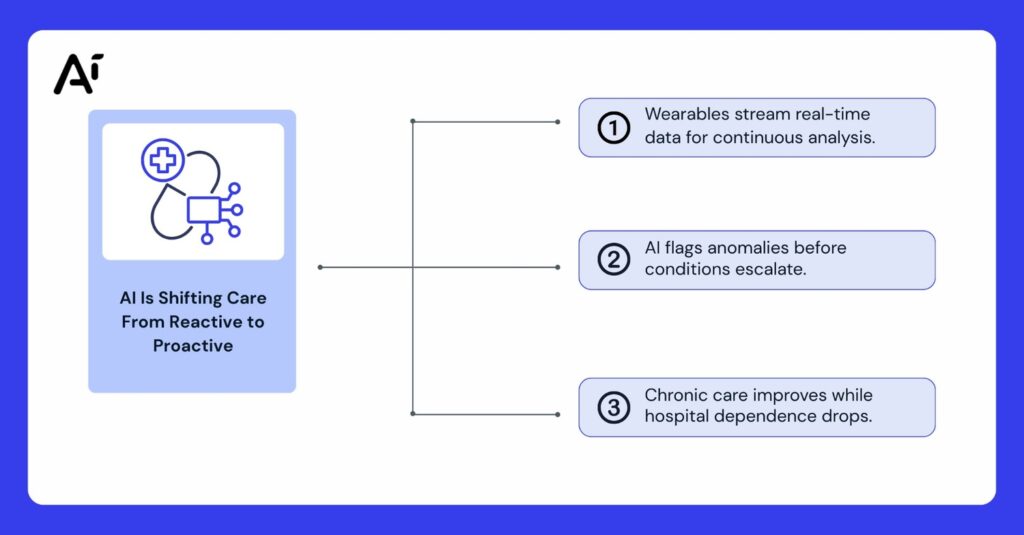
Wearable devices and connected health apps collect real-time patient data such as heart rate, blood pressure, and activity levels. AI continuously analyzes this data, flagging anomalies and alerting healthcare providers when intervention is needed.
This approach improves outcomes for patients with chronic conditions and reduces unnecessary hospital visits. It is a clear example of how AI healthcare trends are shifting care from reactive to proactive.
Administrative inefficiencies are a significant source of frustration in healthcare. Manual data entry, claim processing, and record management consume valuable time and resources.
AI-powered automation addresses these challenges head-on. Intelligent systems can extract information from medical records, validate insurance claims, and detect potential fraud with high accuracy.
By reducing errors and speeding up processes, AI helps hospitals operate more efficiently while maintaining compliance and data integrity. This operational efficiency indirectly improves patient care by freeing up resources for clinical use.
The benefits of AI in hospitals go beyond faster systems and better analytics. AI creates a more balanced healthcare environment where clinicians feel supported rather than overburdened.
Reduced burnout, improved collaboration, and data-driven decision-making all contribute to better care delivery. Patients benefit from more consistent diagnoses, timely interventions, and personalized treatment journeys.
For hospital administrators, AI provides visibility into performance metrics and operational gaps, enabling continuous improvement across departments.
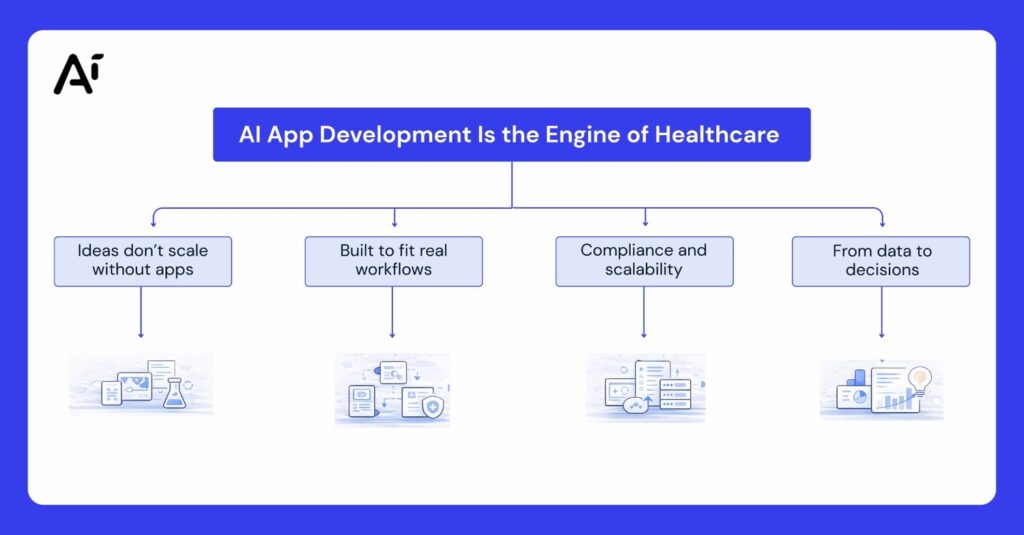
None of these advancements are possible without strong AI app development. Custom healthcare applications are essential to ensure AI solutions fit seamlessly into existing workflows and comply with strict regulatory standards.
Healthcare providers need secure, scalable, and interoperable AI-powered apps that integrate with electronic health records, diagnostic tools, and patient portals. This is where AI-focused development teams play a critical role.
By building AI-first healthcare applications, development partners help organizations turn complex medical data into actionable insights while maintaining privacy, accuracy, and reliability. Search data also shows that healthcare has the highest demand for AI-related app development among industries, highlighting strong market readiness and adoption potential.
The future of healthcare AI is not about flashy innovation. It is about dependable systems that quietly improve outcomes every day. As AI models become more transparent and explainable, trust in AI-driven decisions will continue to grow.
We can expect deeper integration of AI into clinical workflows, more advanced personalized medicine, and broader adoption of remote care solutions. AI will also play a key role in preventive healthcare, identifying risks long before symptoms appear.
Most importantly, the future of AI in medicine and healthcare will remain human-centered. Technology will support clinicians, empower patients, and strengthen healthcare systems rather than replace the human touch that defines good care.
AI in medicine and healthcare is no longer a future concept. It is already transforming patient care by improving accuracy, increasing efficiency, and enabling better outcomes at scale. From diagnostics and decision support to automation and predictive analytics, AI is reshaping how healthcare is delivered.
For healthcare organizations, embracing AI is not just about staying competitive. It is about delivering safer, more intelligent, and more compassionate care. And with the right AI app development approach, these technologies can be tailored to meet real-world clinical needs while keeping patients at the center of every decision.
As AI healthcare trends continue to evolve, one thing is clear. The combination of human expertise and intelligent systems is setting a new standard for modern healthcare.