
Healthcare organizations are under growing pressure to scale operations without compromising patient safety, data security, or clinical accuracy. As patient volumes rise and healthcare systems become more data-driven, traditional software and manual workflows are no longer enough. This is where generative AI in healthcare is playing a critical role in reshaping how healthcare organizations operate and grow.
Unlike rule-based automation, generative AI systems can understand context, process unstructured medical data, and support decision-making across clinical and operational workflows. However, implementing AI in healthcare is not just about deploying models. It requires a structured, secure, and scalable approach that aligns with regulatory standards and real-world healthcare environments.
This guide walks through a practical, step-by-step framework for implementing AI in healthcare, focusing on building scalable, secure AI systems that support long-term innovation.
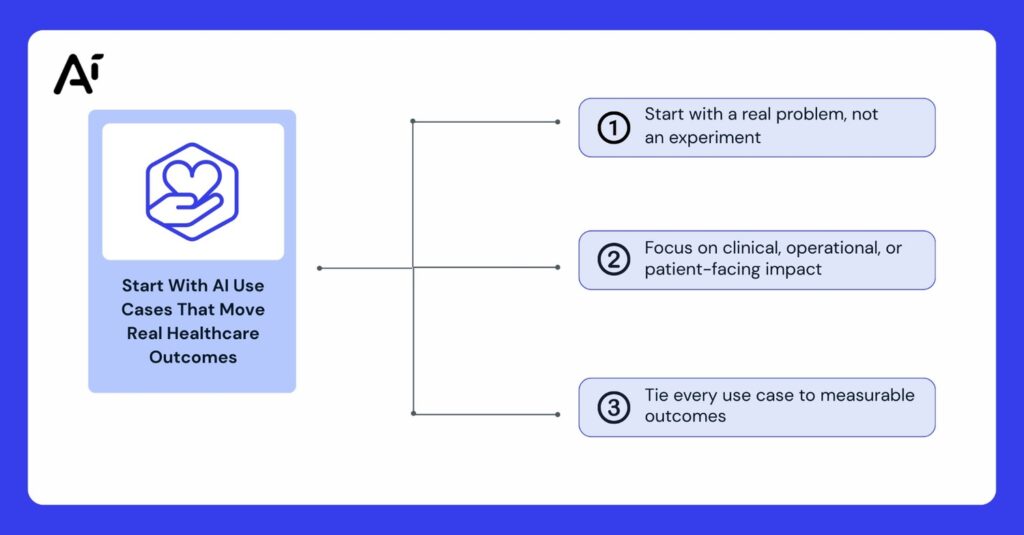
The first step in implementing generative AI is identifying where it creates real value. Many healthcare organizations fail at this stage by adopting AI for experimentation rather than solving concrete problems.
High-impact healthcare AI use cases usually fall into three areas:
Starting with clearly defined use cases ensures that healthcare automation tools are aligned with measurable outcomes, such as reduced turnaround time, improved staff efficiency, or better patient experience.
Scalability is a core requirement for any healthcare AI system. Patient data grows rapidly, and systems must handle increasing workloads without performance degradation or security risks.
A scalable AI development process for healthcare should include:
Generative AI in healthcare relies heavily on large datasets and real-time processing. Without a scalable foundation, AI systems struggle to move beyond pilot stages.
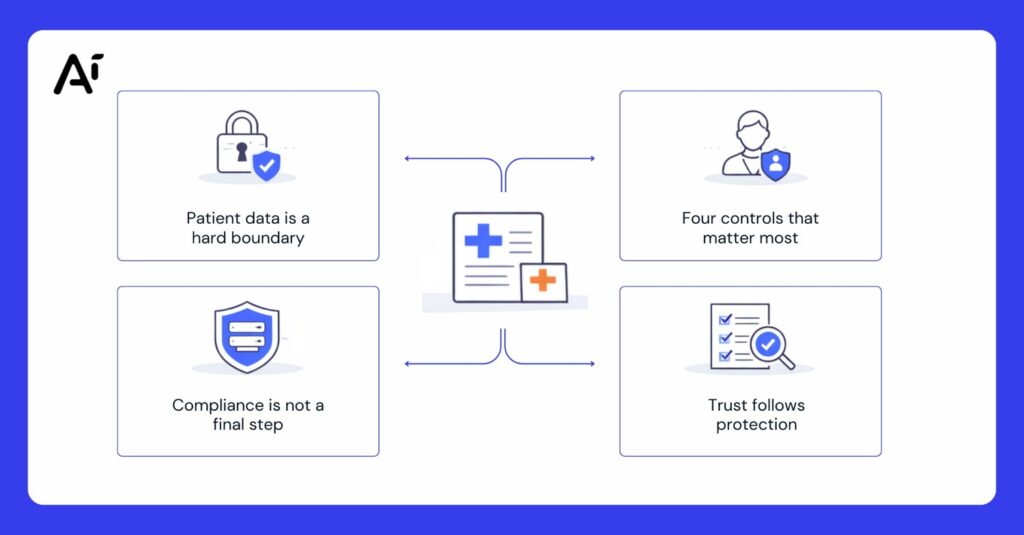
Security and compliance are non-negotiable in healthcare. Any AI implementation must be designed to protect sensitive patient information and meet regulatory requirements.
Key security practices include:
Healthcare organizations must treat compliance as a design principle, not a final checklist. This approach reduces legal risk and builds trust among patients and healthcare professionals.
AI systems are only as reliable as the data they use. In healthcare, poor data quality can lead to inaccurate insights and reduced trust in AI tools.
Best practices for data preparation include:
Strong data governance ensures that generative AI models remain accurate, ethical, and compliant as they scale.
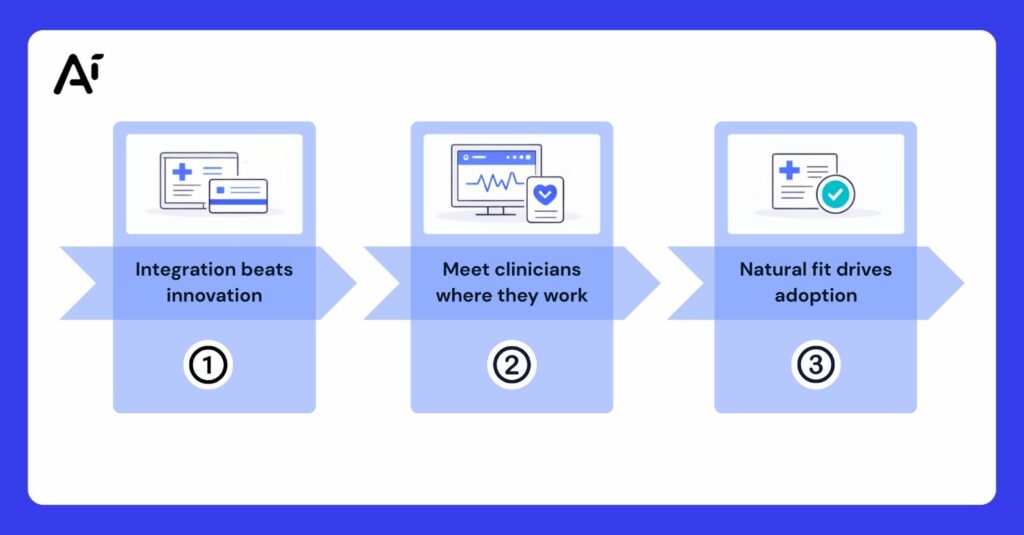
One of the most common reasons AI projects fail is poor integration with existing systems. Healthcare professionals already work across multiple platforms, and AI should reduce friction rather than add complexity.
Practical healthcare automation tools integrate with:
When generative AI fits naturally into existing workflows, adoption increases, and resistance decreases.
AI should support healthcare professionals, not replace them. Human oversight is essential for building trust and ensuring patient safety.
Successful AI implementation in healthcare includes:
This balance between automation and human judgment ensures AI enhances care delivery without compromising accountability.
Healthcare organizations should avoid deploying AI across the entire system at once. A phased rollout reduces risk and allows for refinement based on real-world feedback.
Key metrics to track during testing include:
Iterative testing ensures the system performs reliably before expanding to additional departments or locations.
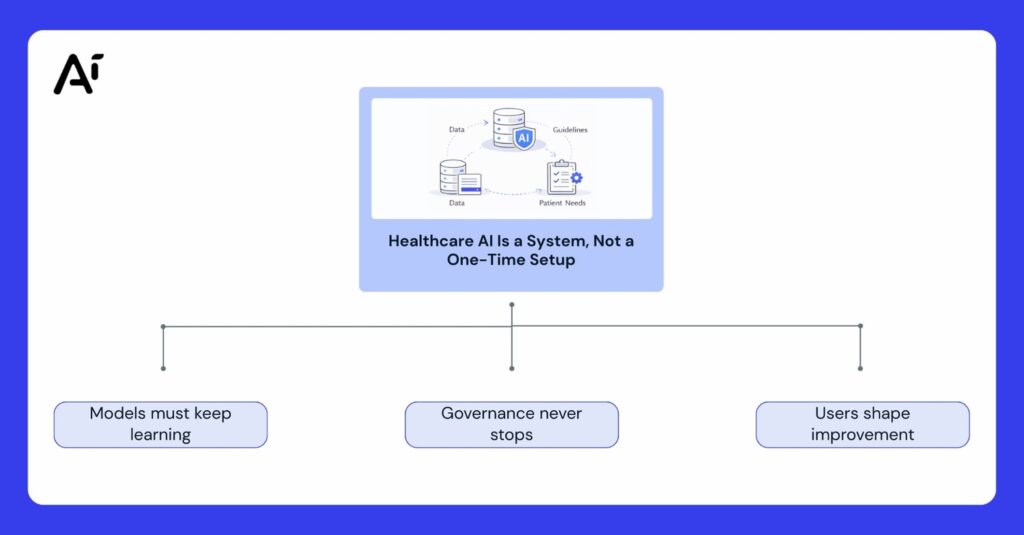
Generative AI is not a one-time implementation. Healthcare needs evolve, regulations change, and data grows continuously.
Long-term AI strategies should include:
Healthcare organizations that view AI as a long-term capability rather than a short-term project are better positioned to innovate and scale sustainably.
Building secure and scalable AI systems for healthcare requires deep technical expertise and domain understanding. AI Panthers works with healthcare organizations to design and implement AI integration and automation solutions that align with real clinical workflows.
By focusing on scalability, security, and production-ready systems, AI Panthers helps healthcare teams move from AI concepts to fully operational solutions that grow with their organizations.
Implementing generative AI in healthcare is no longer optional for organizations aiming to scale efficiently. When executed correctly, AI integration enables healthcare providers to reduce operational burden, improve patient experience, and build systems that adapt to future demands.
A structured AI development process, strong security practices, and scalable architecture are essential for long-term success. Healthcare organizations that invest thoughtfully in AI today are laying the foundation for more resilient, innovative, and scalable healthcare operations tomorrow.