
Healthcare systems worldwide are under constant pressure to improve accuracy, reduce clinical errors, and deliver better patient outcomes at scale. This is where AI and machine learning in healthcare are creating a measurable shift. No longer limited to research labs or pilot projects, AI-powered healthcare applications are now embedded into daily clinical workflows, hospital operations, and patient engagement platforms.
From faster diagnostics to personalized treatment plans, artificial intelligence is helping healthcare providers make better decisions while improving efficiency across the care continuum. This blog explores how AI is reshaping healthcare delivery, why accuracy is improving, and how patient outcomes are benefiting from these advances.
AI and machine learning in healthcare refer to systems that can analyze large volumes of medical data, identify patterns, and assist clinicians in decision-making. Unlike traditional software, these systems continuously learn from new data, such as medical images, electronic health records, lab reports, and patient histories.
Machine learning models are trained using historical healthcare data to detect anomalies, predict outcomes, and recommend next steps. Over time, their predictions become more precise, supporting clinicians rather than replacing them.
The growing adoption of AI is not accidental. Search demand shows healthcare leads all industries in AI-related interest, highlighting both market readiness and investment intent. AI Panther Verticals. This signals a clear shift toward intelligent, data-driven healthcare systems.
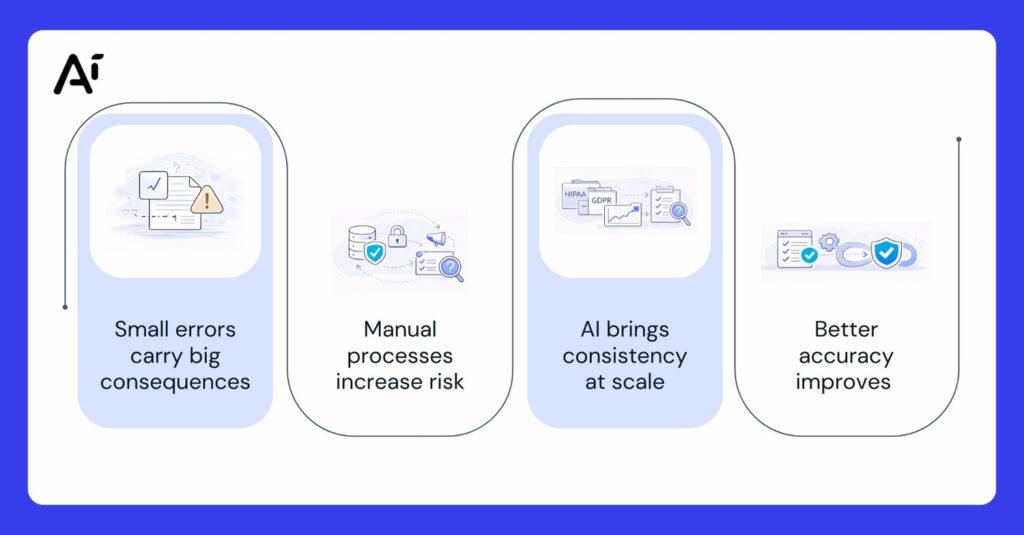
Accuracy directly impacts patient safety, treatment effectiveness, and clinical trust. Even minor diagnostic errors can lead to delayed treatment, unnecessary procedures, or increased healthcare costs.
Traditional healthcare systems rely heavily on manual data interpretation, which increases the risk of human error, especially in high-pressure environments such as emergency care and intensive care units. AI-driven systems reduce this risk by analyzing data consistently and at scale.
By applying machine learning algorithms to medical data, healthcare providers can:
These improvements directly contribute to better patient outcomes and higher operational efficiency.
One of the most impactful benefits of AI in hospitals is improved diagnostic accuracy. AI-powered diagnostic tools analyze medical images such as X-rays, CT scans, and MRIs with remarkable precision.
Machine learning models trained on millions of imaging samples can identify patterns that the human eye may struggle to detect, especially in early-stage conditions. This is particularly valuable in oncology, cardiology, and radiology.
AI-assisted diagnostics help clinicians:
Rather than replacing doctors, AI acts as a clinical support layer that strengthens diagnostic confidence.
Predictive analytics is a major driver of improved outcomes in modern healthcare. AI systems can analyze patient history, real-time vitals, and clinical indicators to predict risks before they escalate.
For example, predictive models can identify patients at risk of hospital readmission, post-surgical complications, or sudden deterioration in critical care units. This enables proactive intervention instead of reactive treatment.
By using AI and machine learning in healthcare delivery, providers can:
These insights support smarter, faster, and more informed clinical decisions.
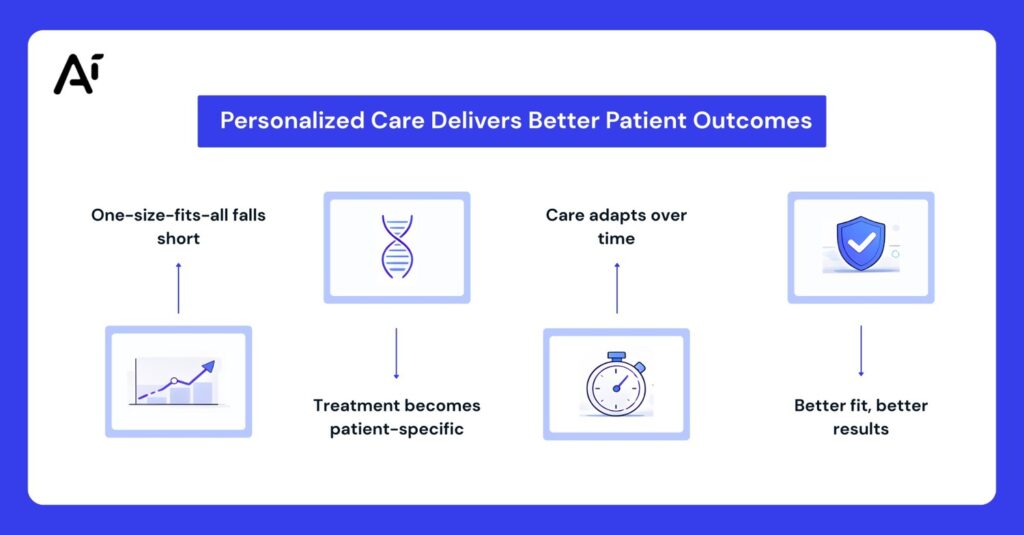
Personalized medicine is a key pillar of the future of healthcare AI. AI systems can analyze genetic data, lifestyle factors, and treatment responses to tailor care plans for individual patients.
Instead of applying one-size-fits-all treatment protocols, AI-driven platforms enable:
This personalized approach improves treatment effectiveness while reducing adverse reactions, leading to higher patient satisfaction and better recovery rates.
Operational inefficiencies are a significant challenge in healthcare. Administrative workloads often take time away from patient care. This is where AI-powered automation delivers measurable value.
Healthcare automation tools powered by AI streamline processes such as:
Natural language processing allows AI systems to extract structured data from unstructured medical records, reducing documentation errors and freeing clinicians to focus on patient care.
As a result, hospitals experience improved workflow efficiency and reduced burnout among healthcare professionals.
Telemedicine has grown rapidly, and AI is enhancing its effectiveness. AI-enabled telehealth platforms use symptom checkers, risk assessment models, and real-time data analysis to support virtual care.
Remote monitoring systems integrated with wearable devices can track vital signs and flag abnormalities before they become critical. This is especially valuable for chronic disease management and post-discharge care.
Through AI healthcare trends such as remote monitoring and intelligent triage, providers can:
This shift contributes to better patient outcomes while reducing system-wide strain.
Accuracy in healthcare also depends on data integrity and compliance. AI systems can help detect inconsistencies, unauthorized access, and potential data breaches in real time.
Machine learning models monitor system activity patterns and flag anomalies that may indicate security risks. This strengthens compliance with healthcare data regulations while maintaining trust between patients and providers.
Secure AI-driven platforms ensure sensitive patient data remains protected while maintaining accessibility for authorized users.
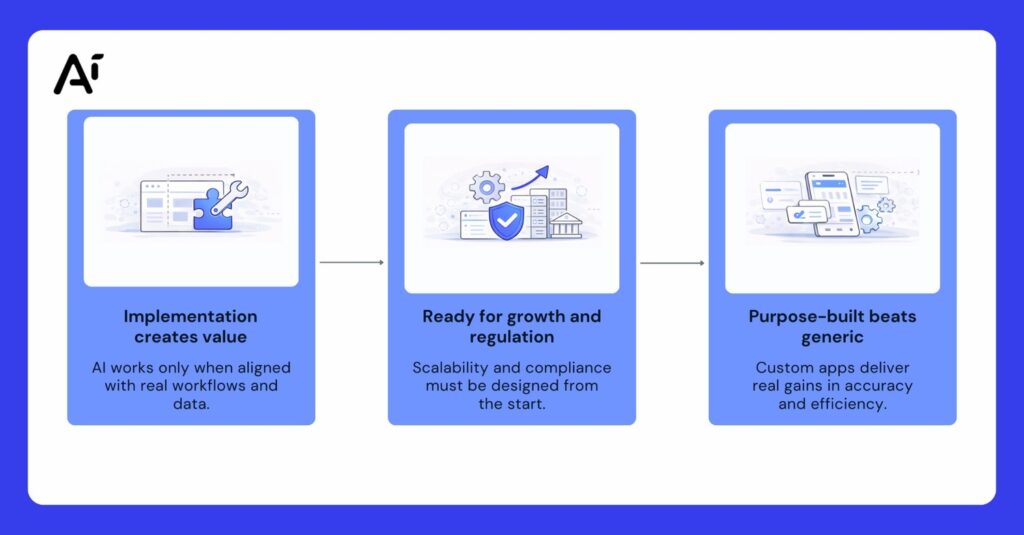
The actual value of AI lies in how well it is implemented. Custom AI app development enables healthcare organizations to align technology with their specific workflows, data environments, and patient needs.
Well-designed AI healthcare applications:
By focusing on purpose-built solutions rather than generic tools, healthcare providers unlock the full potential of AI and machine learning in healthcare delivery.
The future of healthcare AI is centered on collaboration between technology and human expertise. AI will continue to evolve as a clinical decision-support partner rather than an autonomous replacement.
Key trends shaping the future include:
As healthcare organizations invest in intelligent systems, the focus will remain on improving accuracy, enhancing patient outcomes, and delivering care more efficiently.
AI and machine learning in healthcare are no longer optional innovations. They are becoming foundational to modern healthcare delivery. By improving diagnostic accuracy, enabling personalized treatment, and automating complex workflows, AI is transforming how care is delivered and experienced.
Healthcare providers that embrace AI-driven solutions today are better positioned to deliver safer, faster, and more effective care tomorrow. As adoption continues to grow, the combination of human expertise and intelligent systems will define the next era of healthcare excellence.