
Healthcare organizations are under constant pressure to innovate while maintaining the highest standards of compliance, data security, and patient trust. As artificial intelligence becomes deeply embedded across diagnostics, patient engagement, clinical workflows, and hospital operations, the real challenge is no longer whether AI can be used, but how it should be implemented responsibly.
This is where AI in medicine and healthcare demands a different approach compared to other industries. Healthcare data is sensitive, regulated, and mission-critical. AI systems must not only deliver performance and scalability, but also comply with global healthcare regulations, protect patient privacy, and integrate seamlessly with existing clinical ecosystems.
Partnering with the right AI development company plays a decisive role in achieving these outcomes. AI Panthers specializes in building compliant, secure, and customized AI healthcare software that helps organizations innovate without compromising trust.
Unlike consumer or retail applications, healthcare AI operates in a highly regulated environment. Patient data, diagnostic decisions, and treatment recommendations directly impact human lives. Even a minor oversight in compliance or security can lead to legal penalties, reputational damage, and patient harm.
Regulations such as HIPAA, GDPR, and region-specific healthcare data laws exist to ensure that patient information is handled responsibly. For healthcare providers and digital health companies, this means any AI implementation must be designed with compliance at its core, not added later as an afterthought.
Trust is equally critical. Clinicians need confidence in AI-driven insights. Patients need assurance that their data is safe. Administrators need transparency in how systems make decisions. This combination of compliance and trust forms the foundation for successful AI implementation in healthcare initiatives.
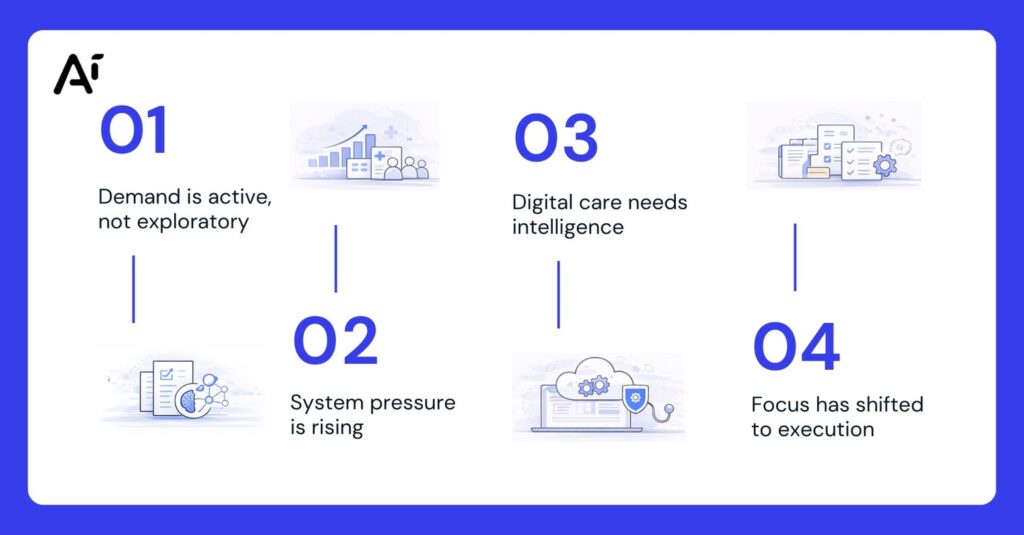
Market data shows that healthcare is currently the strongest vertical for AI adoption, both in search demand and in real-world implementation. AI-related healthcare searches significantly outperform those in other industries, indicating that decision-makers are actively seeking solutions rather than merely exploring trends. AI Panther Verticals.
Several factors drive this demand:
Healthcare organizations are no longer experimenting with AI. They are looking for reliable healthcare AI vendors who can deliver production-ready, compliant systems tailored to their workflows.
Custom AI healthcare software can support a wide range of use cases when built correctly.
AI chatbots and virtual assistants help healthcare providers manage appointment scheduling, patient queries, symptom triage, and follow-ups. These systems improve accessibility while reducing administrative workload for clinical staff.
Machine learning models trained on medical images can assist radiologists in detecting anomalies in X-rays, MRIs, and CT scans. When developed with proper validation and regulatory alignment, these tools enhance accuracy and speed without replacing human expertise.
AI enables intelligent telemedicine platforms by analyzing patient-reported symptoms, wearable data, and vitals in real time. This allows clinicians to identify risks early and intervene proactively.
Predictive models can forecast patient outcomes, readmission risks, or disease progression patterns. These insights help hospitals allocate resources more efficiently and improve patient care strategies.
Natural language processing helps automate documentation by extracting structured data from electronic health records. This reduces clinician burnout and improves data accuracy across systems.
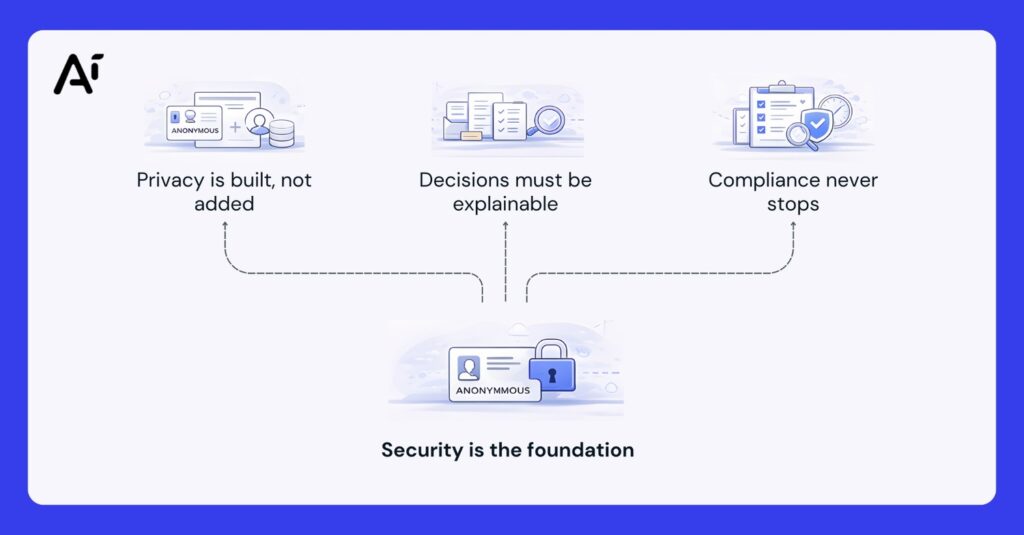
Building HIPAA-compliant AI apps requires more than encryption and access controls. Compliance must be embedded throughout the AI development process.
Healthcare AI systems must use secure data pipelines with encryption at rest and in transit. Role-based access ensures that only authorized personnel can view or modify sensitive information.
Patient privacy should be built into system architecture from day one. This includes anonymization, consent management, audit trails, and strict data retention policies.
Healthcare AI must provide explainable outputs, especially for diagnostic or decision-support tools. Clinicians need to understand how recommendations are generated to trust and validate results.
Regulatory standards evolve. AI systems must be designed to adapt through regular audits, logging, and monitoring to ensure long-term compliance.
Off-the-shelf AI tools often fail in healthcare settings because they do not align with real clinical workflows or regulatory requirements. Custom AI healthcare software solves this by tailoring functionality, integrations, and data handling to specific organizational needs.
Custom development allows healthcare providers to:
This level of customization is essential for organizations seeking long-term value from AI in medicine and healthcare.
AI Panthers positions itself as an AI-first healthcare development partner, not a generic software vendor. The focus is on building scalable, secure, and compliant AI systems that deliver measurable impact.
AI Panthers understands the unique challenges of implementing healthcare AI. From patient data sensitivity to regulatory complexity, every solution is designed with industry-specific requirements in mind.
The development lifecycle covers strategy, data architecture, model development, compliance alignment, testing, deployment, and post-launch optimization. This ensures that AI solutions move smoothly from concept to production.
Every project follows strict security protocols and compliance standards. This includes HIPAA-aligned architecture, secure cloud deployment, and continuous monitoring.
AI Panthers works as a strategic partner rather than a one-time vendor. Ongoing optimization, scalability planning, and system upgrades ensure that healthcare organizations remain future-ready.
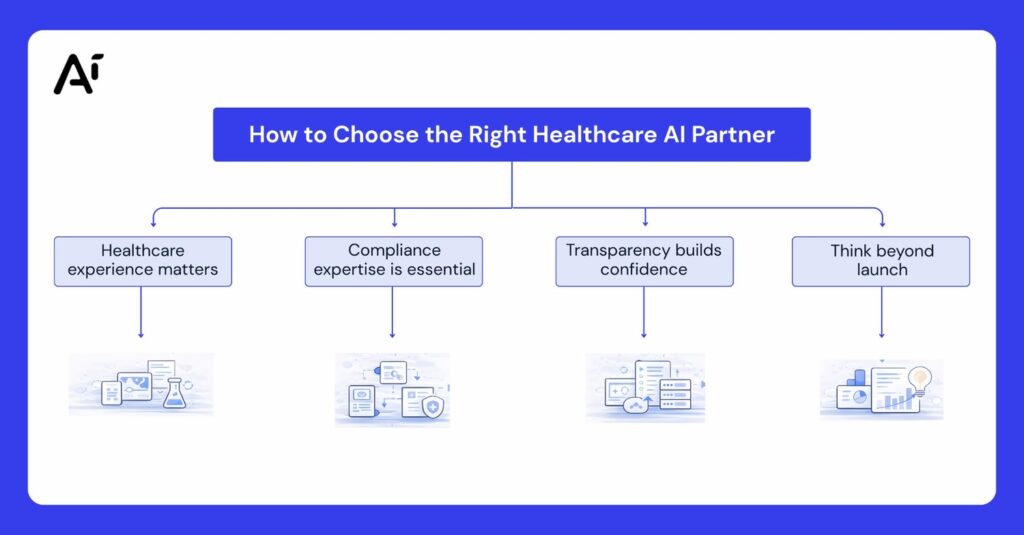
Selecting the right partner is one of the most critical decisions in AI implementation for healthcare projects. Healthcare organizations should look for vendors who demonstrate:
AI Panthers meets these criteria by combining technical expertise with a deep understanding of healthcare operations and regulatory environments.
The future of healthcare will be shaped by intelligent systems that improve patient outcomes, reduce clinician workload, and enhance operational efficiency. However, this future depends on responsible implementation.
Compliance and trust are not optional in healthcare AI. They are the foundation on which innovation must be built. By partnering with experienced healthcare AI vendors like AI Panthers, organizations can confidently adopt AI solutions that are secure, compliant, and tailored to their needs.
AI in medicine and healthcare is no longer about experimentation. It is about execution. With the right partner, healthcare organizations can unlock the full potential of AI while protecting what matters most: patient trust and data integrity.