
Healthcare has always aimed to deliver the proper treatment to the right patient at the right time. For decades, that goal was limited by population averages. Standard treatment protocols worked for many patients, but they often failed to account for individual differences in genetics, biology, and lifestyle. This gap is exactly where personalized medicine AI is transforming modern healthcare.
Today, organizations like AI Panthers are helping healthcare providers move from generalized treatment models to data-driven treatment strategies built around each patient. By combining clinical data, genomics, and real-world outcomes, personalized medicine is no longer an aspiration. It is becoming the new standard for improving accuracy and patient outcomes.
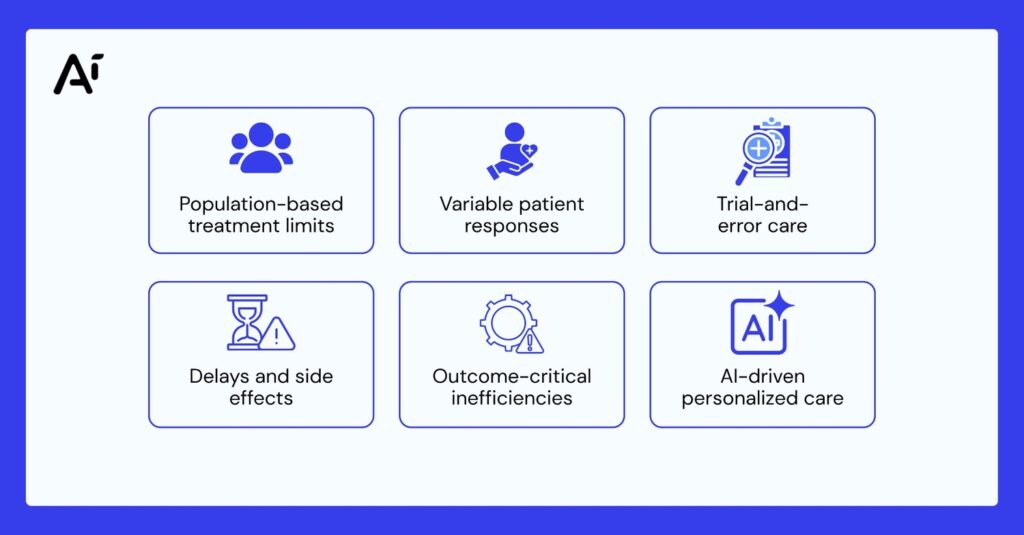
Most clinical guidelines are designed using large-scale studies. While these studies are valuable, they focus on what works for the majority, not the individual. Two patients with the same diagnosis can react very differently to the same medication or dosage.
This variability leads to delayed recovery, avoidable side effects, and repeated treatment adjustments. In critical conditions such as cancer, cardiovascular disease, or autoimmune disorders, this trial-based approach can directly impact patient outcomes.
Personalized medicine AI addresses this limitation by analyzing patient-specific data at a scale that manual processes cannot handle. It enables clinicians to move from reactive decision-making to predictive and precise care planning.
Personalized medicine AI uses artificial intelligence models to analyze a combination of patient data points, including medical history, lab results, imaging, genomics, and lifestyle indicators. These systems identify patterns that help predict how a patient will respond to different treatment options.
Instead of asking what is commonly prescribed, clinicians can ask what is most likely to work for this individual patient. This shift improves accuracy while reducing unnecessary treatments and adverse reactions.
At AI Panthers, this approach is built into how AI systems are designed. Rather than deploying generic models, they focus on patient-specific intelligence that adapts to real clinical workflows and evolving datasets.
Genomics plays a central role in personalized medicine. A patient’s genetic profile can reveal how they metabolize drugs, their risk for certain conditions, and how their disease may progress. However, genomic data is massive and complex.
AI in genomics makes this data actionable. Machine learning models analyze genetic variants and correlate them with known clinical outcomes. This allows clinicians to select therapies that align with a patient’s biological profile rather than relying on broad assumptions.
In oncology, genomics-driven AI helps identify targeted therapies that match tumor-specific mutations. In rare diseases, it assists in earlier diagnosis where traditional methods often fail. These capabilities significantly improve patient outcomes by reducing guesswork in treatment selection.
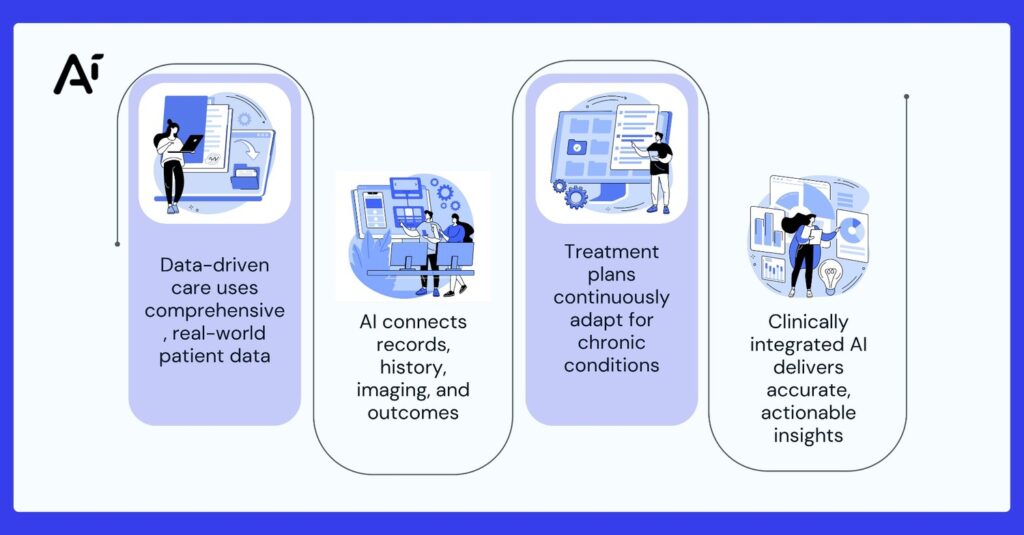
Data-driven healthcare extends beyond genomics. It includes longitudinal patient records, treatment histories, imaging data, and real-world outcome tracking. Personalized medicine AI connects these data points to guide ongoing treatment decisions.
For chronic conditions such as diabetes or heart disease, treatment plans must evolve. AI systems continuously analyze how patients respond to therapy and recommend adjustments when risks or inefficiencies are detected.
AI Panthers builds these systems with a strong focus on accuracy and reliability. Their AI solutions are designed to integrate with existing healthcare infrastructure, ensuring clinicians receive insights that are both actionable and clinically relevant.
Personalized care also depends on access to therapies that can be matched to individual patients. Drug discovery AI accelerates this process by analyzing molecular data, biological pathways, and clinical trial results to identify promising drug candidates.
AI helps researchers understand which patient groups are most likely to benefit from a specific drug even before large-scale trials begin. This reduces development time and increases the success rate of precision therapies.
By supporting AI-driven research and development workflows, AI Panthers enables healthcare organizations and life sciences companies to align drug innovation with personalized treatment strategies.
One of the most critical aspects of personalized medicine AI is that it supports clinicians rather than replacing them. AI systems provide evidence-based recommendations, but final decisions remain in the hands of healthcare professionals.
These tools enhance diagnostic accuracy, highlight potential risks, and rank treatment options based on predicted patient response. Clinicians gain deeper insights while maintaining complete control over care decisions.
This collaboration between human expertise and AI-driven intelligence leads to better-informed decisions and more consistent patient outcomes.
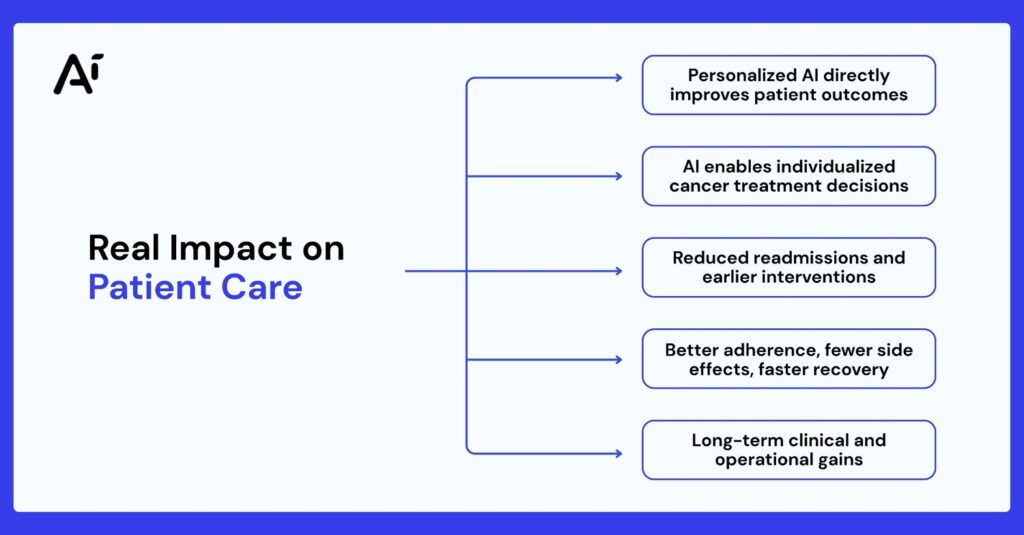
The real value of personalized medicine AI lies in its impact on patients. AI-driven platforms such as Tempus already demonstrate how data and AI can guide individualized cancer treatment decisions.
Across healthcare systems, similar approaches are reducing hospital readmissions, improving therapy adherence, and enabling earlier interventions. Patients experience fewer side effects, faster recovery, and greater confidence in their care plans.
Organizations that adopt these models see long-term benefits in both clinical performance and operational efficiency.
Despite its potential, personalized medicine AI comes with challenges. Healthcare data is often fragmented across systems. Privacy, security, and regulatory compliance are critical considerations, especially when working with genomic data.
Another challenge is trust. Clinicians must understand how AI systems arrive at their recommendations. Explainable and transparent AI models are essential for adoption in clinical environments.
AI Panthers addresses these challenges by building secure, compliant, and interpretable AI systems that align with healthcare regulations and ethical standards.
Personalized medicine AI is reshaping healthcare from the ground up. As datasets grow and models become more refined, treatment planning will become increasingly predictive and preventive.
Patients will receive care that adapts to their unique biology and changing health conditions. Healthcare providers will gain tools that improve accuracy without increasing administrative burden.
With its focus on data-driven treatment and patient-specific intelligence, AI Panthers is helping healthcare organizations transition toward this future where personalized care is not an exception, but the norm.
Personalized care powered by AI represents a fundamental shift in medicine. By combining AI in genomics, drug discovery AI, and data-driven healthcare systems, providers can deliver treatments tailored to each patient.
This approach improves accuracy, strengthens patient outcomes, and builds trust in modern healthcare systems. As personalized medicine AI continues to evolve, organizations like AI Panthers will play a critical role in turning complex data into meaningful, life-improving care decisions.